
Homework Battles Every Night? 8 Strategies to Help Kids Stay Focused
- Dominique Marinello
- Mar 21
- 3 min read
If homework time in your house regularly turns into a battle, you’re not alone. Many parents struggle with getting their child to start assignments, stay focused, or finish work without frustration.
Often, homework challenges aren’t about laziness or lack of intelligence. They’re usually connected to executive function skills—the mental processes that help students plan, organize, manage time, and stay focused.
The good news is that with the right strategies and support, homework time can become much calmer and more productive.
Below are several practical homework strategies for kids and teens that can help reduce stress and build stronger learning habits.
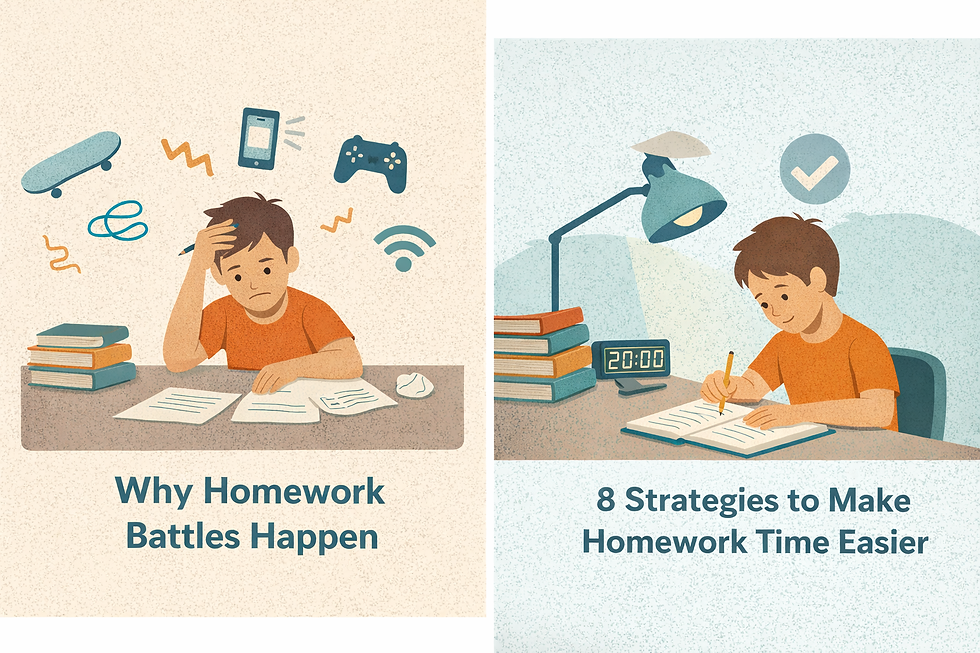
Why Homework Battles Happen
Homework can feel overwhelming for students who struggle with organization, task initiation, or attention. When a child doesn’t know where to start or how long something will take, avoidance and frustration often follow.
Common executive function challenges include:
Difficulty starting assignments
Trouble staying focused
Forgetting instructions or materials
Feeling overwhelmed by large projects
Poor time management
These challenges are especially common for students with ADHD, learning differences, or executive functioning delays, but many students experience them at times.
8 Strategies to Make Homework Time Easier
Create a Consistent Homework Routine
Predictable routines reduce resistance. Try to schedule homework at the same time each day so it becomes a habit.
For example:
Snack
Short break
Homework time
Free time afterward
Consistency helps students mentally prepare for the task ahead.
Break Assignments Into Smaller Steps
Large assignments can feel intimidating. Help your child break tasks into smaller, manageable steps.
Instead of:“Finish your science project,” try:
Gather materials
Write outline
Complete first section
Review work
Small steps make progress easier to see.
Use Timers to Improve Focus
Many students focus better when work happens in short bursts.
Try setting a 20–25 minute timer, followed by a short break. This method keeps work manageable and prevents burnout.
Create a Calm Homework Space
A dedicated workspace helps reduce distractions. Ideally it should be:
Quiet
Organized
Stocked with supplies
Free from phones or TVs when possible
A consistent study environment signals the brain that it’s time to focus.
Start With the Easiest Task
Starting is often the hardest part. Begin with a quick or easier assignment to build momentum and confidence.
Once students feel successful, they’re more likely to tackle harder tasks.
Use Visual Planners or Checklists
Visual supports can make tasks feel clearer and more manageable.
Helpful tools include:
Daily planners
Homework checklists
Assignment trackers
Checking off completed tasks gives students a sense of accomplishment.
Build in Short Breaks
Students concentrate better when they know a break is coming.
Short breaks can include:
stretching
walking around
grabbing water
quick movement activities
These reset attention and improve productivity.
Focus on Progress, Not Perfection
Homework struggles often come with frustration or low confidence. Encourage effort and improvement rather than perfect results.
Positive reinforcement helps build motivation and resilience.
When Homework Struggles May Be an Executive Function Issue
If homework battles happen frequently, it may indicate challenges with executive functioning skills like organization, planning, and time management.
Students who benefit from executive functioning support often:
procrastinate frequently
lose materials or forget assignments
feel overwhelmed by multi-step tasks
struggle to start work independently
In these cases, structured guidance and skill-building can make a big difference.
How Educational Therapy Can Help
At Reimagine Education, students learn practical strategies to strengthen executive function skills, organization, and motivation so homework becomes more manageable.
Educational therapy focuses on helping students:
build effective homework routines
improve organization and planning
develop time management skills
increase confidence and independence
With the right tools and support, homework time can shift from a daily battle to a productive learning routine.
If homework struggles are creating stress at home, support is available. You can learn more about executive functioning support and educational therapy at Reimagine Education by reaching out to schedule a consultation.


